The science finally caught up with what you already felt
I recently discovered a scientific field that is as little known to the general public as it is fascinating, and I really wanted to tell you about it today!
The fascinating world of epigenetics
So, as you probably already know, we are born with a unique set of genes (unless you have an identical twin or a clone). But these genes are a potential. They're a set of possibilities, some of which get expressed and some of which don't, depending largely on your environment and your lifestyle. Twins can age very differently, develop different illnesses, live different lengths of life, because their genes express themselves differently.
In simple terms, epigenetics is the study how what exactly affects the expression of these genes. And what the research shows is... worrying but also very encouraging.
One of the clearest markers scientists have found for gene expression is telomere length. Telomeres are the protective structures at the ends of your chromosomes, and they naturally shorten with age. Their rate of shortening is linked to the chronic diseases we associate with getting older: heart disease, inflammation, and neurogenerative diseases like Alzheimer's and Parkinson's.
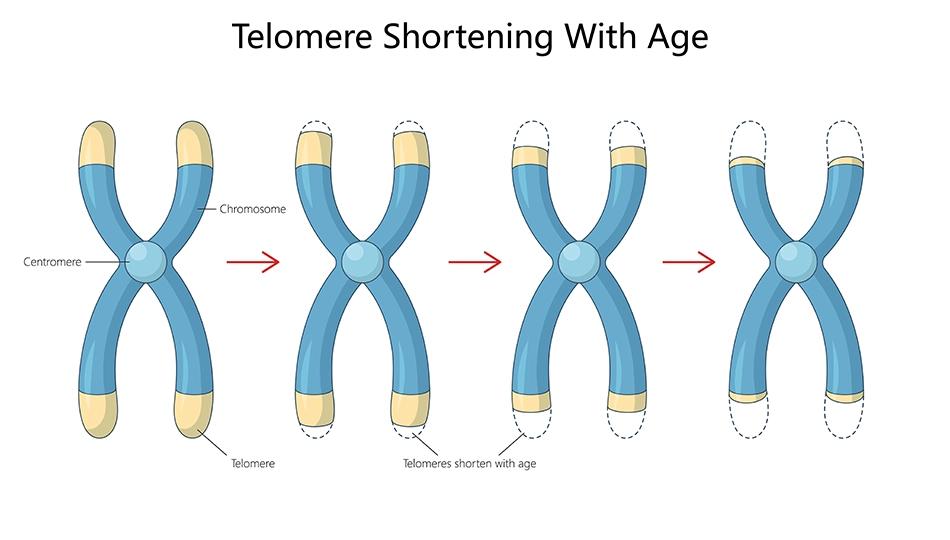
Research shows that *chronic stress accelerates that shortening a lot.* They've done studies with parents caring for an autistic child, people living in poverty, people caring for a parent with Alzheimer's... And they all showed telomere lengths that put their biological age well ahead of their actual age.
Simply put: you might be 40, but if you live with chronic stress, your genes might be 57.
So far, it all sounds a bit grim, but bear with me.

You can't suppress all stress, but you can still protect your telomeres
Research also suggests that it's not the difficult circumstances themselves that directly damage our bodies. It's how we respond to those circumstances: how they're perceived, received, and processed by us. And that is something that we have control over.
Multiple studies on meditation and mindfulness practices have found a protective effect on telomere length. Participants who meditate regularly have longer telomeres than those who don't.
If you already do yoga or meditation, you probably already know that it's good for you. You can feel it. You feel less tension, you sleep better, you're less reactive... But now we know it goes quite a bit further than that.
I had no idea that it could actually change my genes and slow down the aging process in quite this way. I'm more in love with this practice every single day, and seeing this ancient Indian wisdom validated by science now is blowing my mind!
So... Something to try this week: after your next movement or breathing practice, however short it was, remind yourself that what you just did reached further than your muscles and your mood.
I hope you find in this bit of info the motivation boost you need to get onto your yoga mat this week :)
Om, peace 🧡
Clem


